Every job below is one we do ourselves across Easton.
A driveway takes the weight of every vehicle you own plus the delivery trucks and the plow blade in January. We pour a minimum 4-inch slab over compacted stone base, and go thicker if you're parking an RV or a dually on it. We saw-cut control joints the same day, before the slab finds its own place to crack.
Patios don't carry cars but they do carry furniture, grills and hot tubs, and the finish matters more since you're looking at it up close. We can broom finish it, trowel it smooth, or expose the aggregate depending on how much slip resistance you want. Give it a week before you set furniture on it.
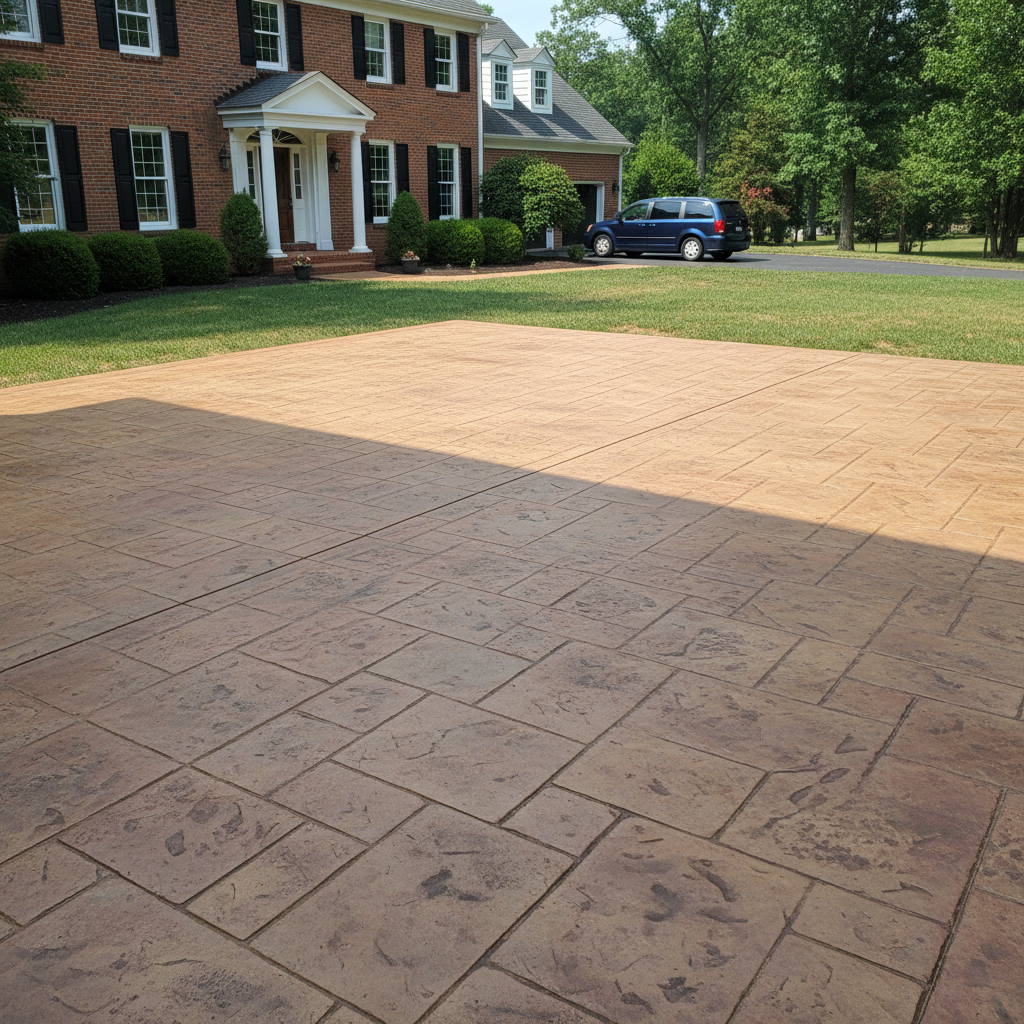
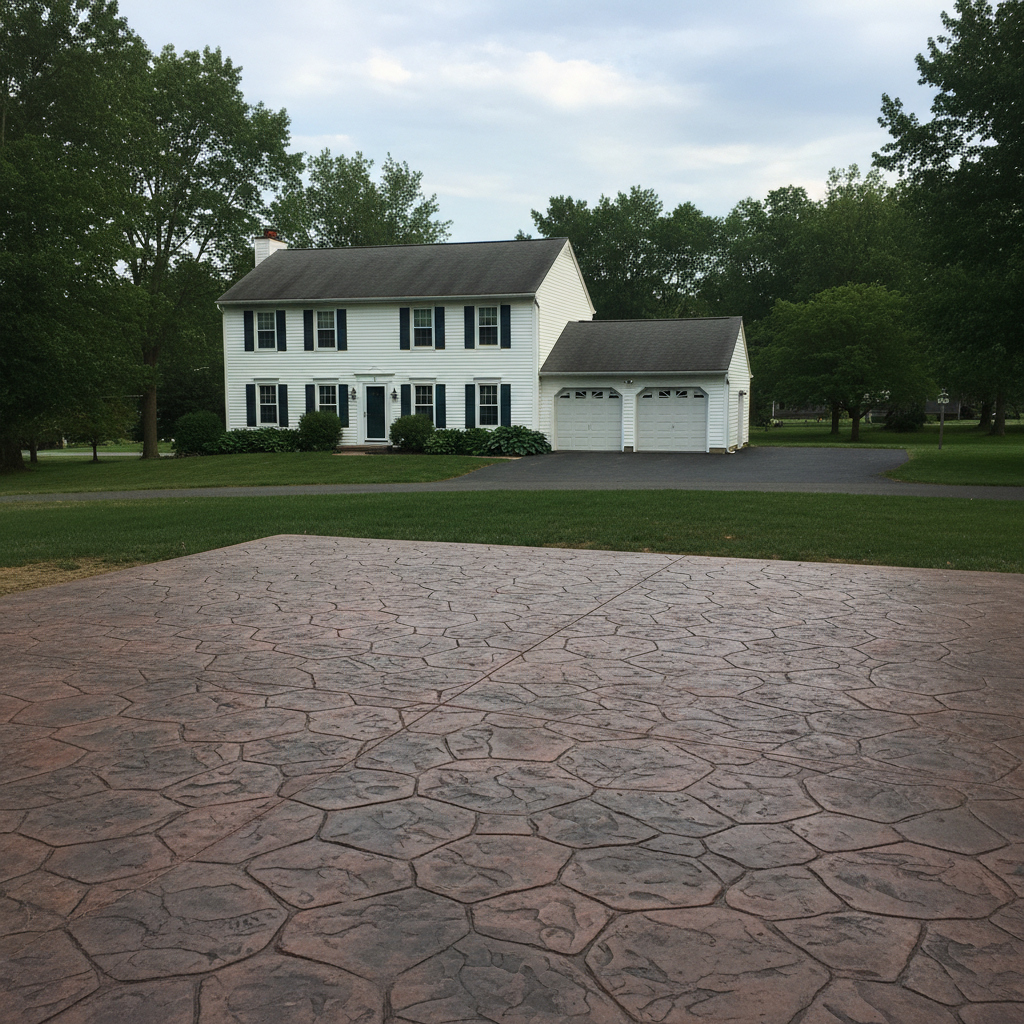
Stamped concrete gets you the look of flagstone, slate or brick without the joints where weeds grow. We color it integrally or with a release agent, then seal it so the color doesn't wash out the first wet winter. Reseal every two to three years or the surface starts to look chalky.
A cracked or heaved sidewalk is usually a tripping hazard before it's an eyesore. We form new walkways 3 to 4 inches thick with a slight crown so water runs off instead of pooling and refreezing. Township sidewalks sometimes need to match a specific grade at the curb, and we check that before we pour.
Steps and porches take more direct wear than almost anything else on a property. We tie new steps into the existing foundation with rebar dowels so they don't settle away from the house over a season or two. Nosing and tread depth get built to code, not just to whatever looks close.
A slab foundation has to be flat, level, and graded to drain before a single wall goes up on it. We lay out plumbing sleeves and anchor bolts against the framer's plans, not a guess. Vapor barrier goes down under the slab so ground moisture doesn't end up in your flooring.
A sunken slab next to a garage or porch usually means the soil underneath washed out or settled, not that the concrete itself failed. We can mudjack or foam-lift a slab back to grade in a lot of cases instead of tearing it out. If the concrete's actually broken up or the rebar's exposed, replacement is the honest answer.
Hairline cracks are normal, concrete shrinks as it cures and it's going to crack somewhere. What we watch for is a crack that's wider on one side than the other, which usually means something underneath moved. We rout and fill the ones letting water in, and we'll tell you straight if a crack means the slab needs to come out.
Garage floors take oil and road salt off your tires all winter, plus the weight of whatever's parked or stored on them. We pitch the slab toward the door so meltwater doesn't sit in the middle of the floor. If you want it epoxy-coated later, we finish it smooth enough for that from the start.
A retaining wall holds back soil that wants to move, so drainage behind it matters as much as the concrete in front of it. We put in perforated drain pipe and gravel backfill before the wall goes up, not after it's already holding water. Walls over about 4 feet usually need engineering and a permit, and we handle both.
Four steps, and no surprises in any of them.
You tell us what you want doing, we look at what is actually there, and we ask the awkward questions early.
In writing, itemised, free. If something might add cost later we flag it now rather than at the end.
Same crew throughout. We cover your floors, keep the dust down and tidy up before we leave each day.
You point out anything you are not happy with and we fix it before the invoice, not after.
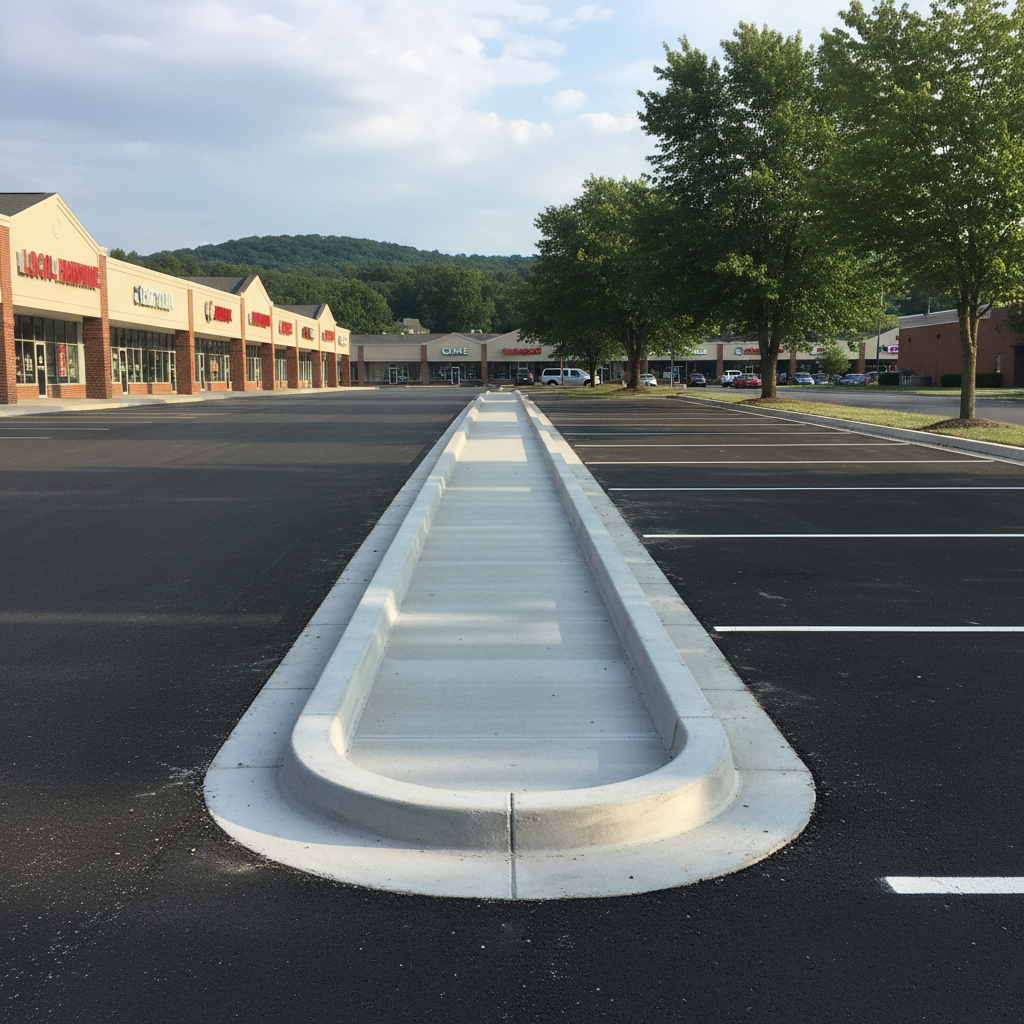
A few driveways, patios and walkways we've poured recently.
These are the towns where we're pouring driveways, patios and foundations most weeks.
Questions that come up once a concrete job is actually underway.
Describe the problem and we will tell you what it probably is. No obligation.